Commercial roofs that keep the doors open
For a business, a leak isn't just a stain. It's closed aisles, wet inventory and tenants on the phone. We plan commercial roof work around the people inside.
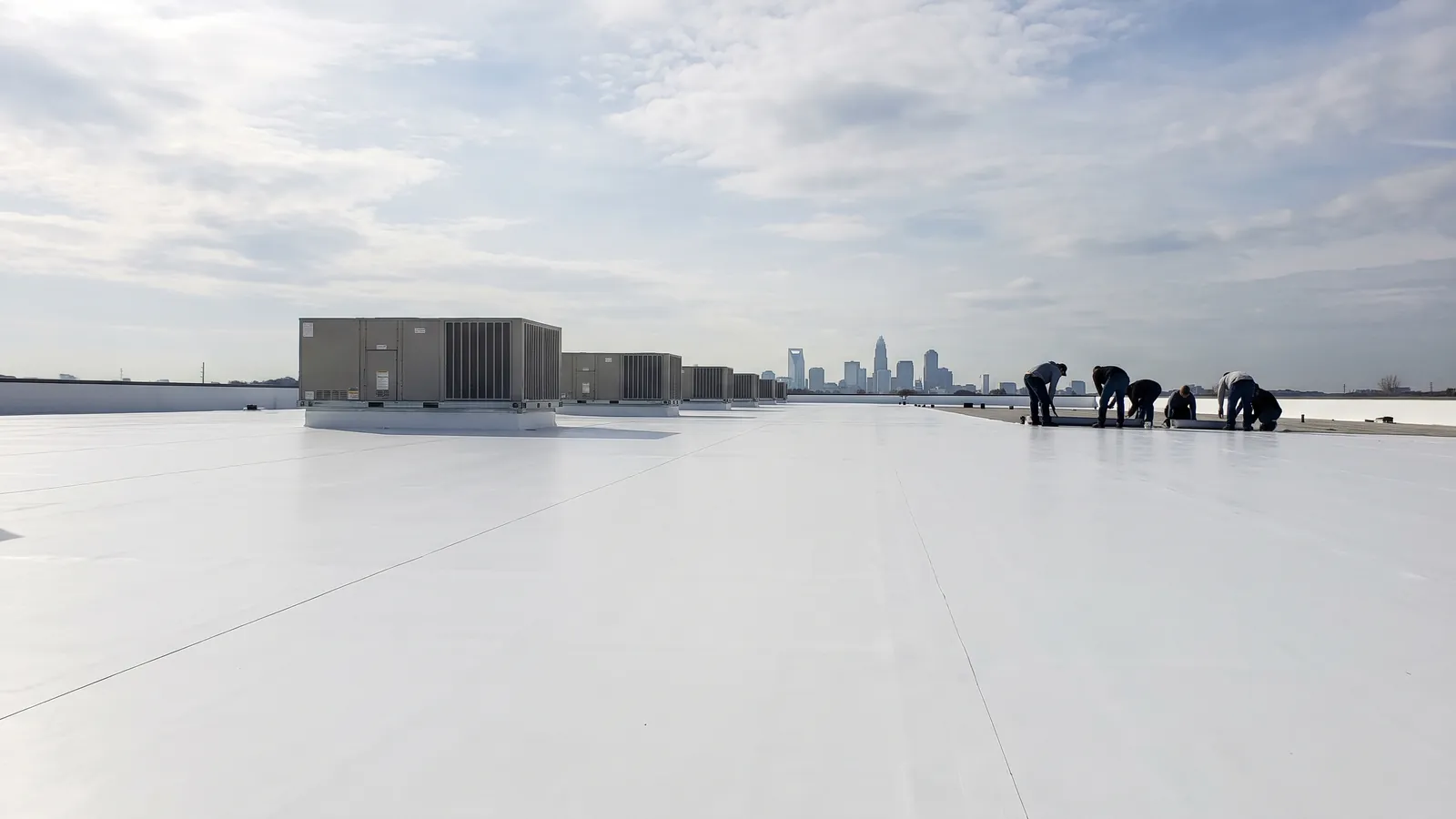
Charlotte's commercial roofs are mostly low-slope: warehouses and distribution buildings along the I-85 and I-77 corridors, strip retail and office parks in the suburbs, churches with a mix of pitched and flat sections, and apartment and townhome buildings. The work falls into four buckets. Repairs fix split seams, open flashing and storm damage. Recovers put a new membrane over an existing roof when the deck and insulation are dry and code allows it. Replacements tear off to the deck and rebuild the whole assembly. Maintenance plans put eyes on the roof twice a year so small failures don't turn into ceiling tiles on the floor.
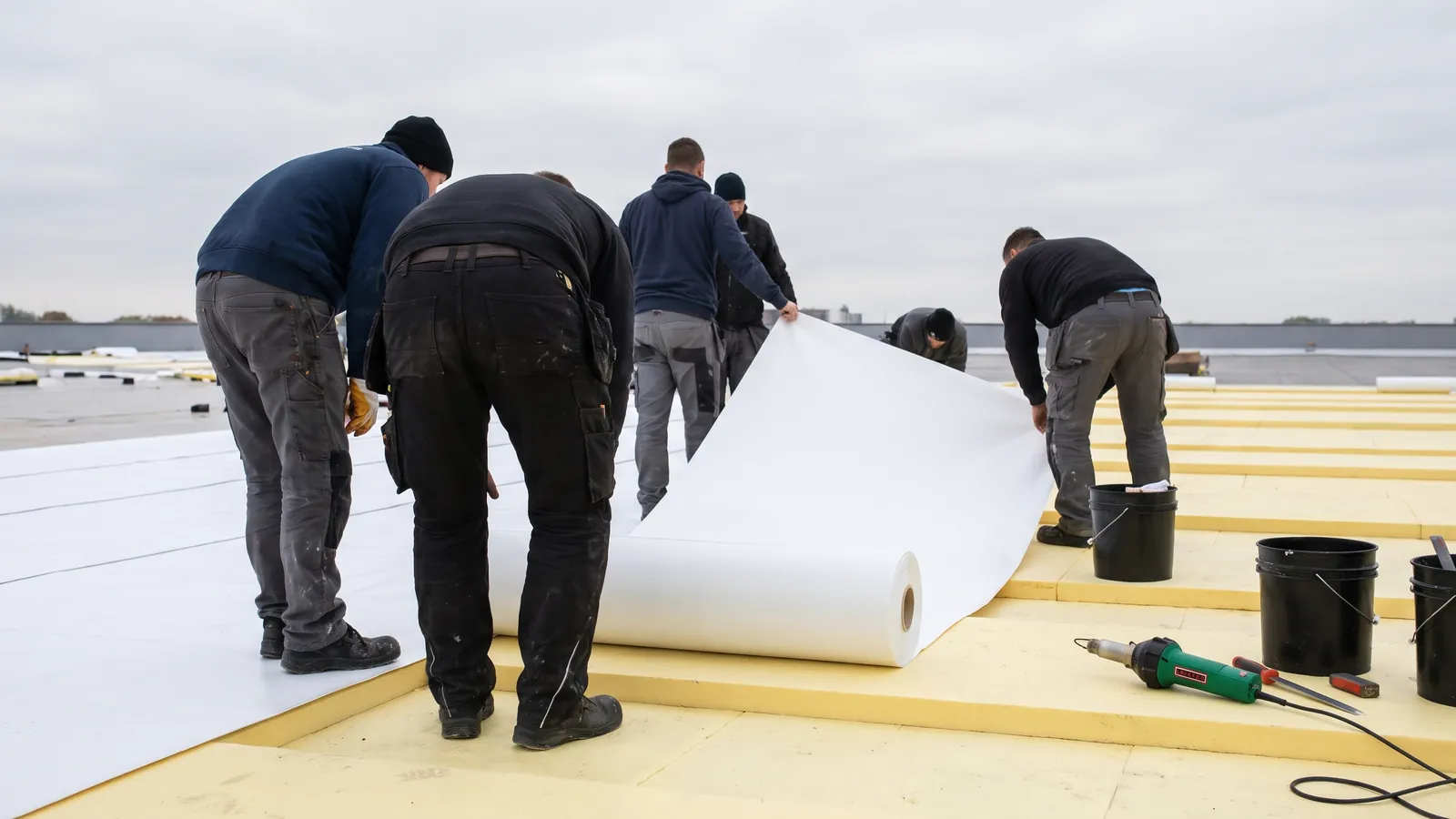
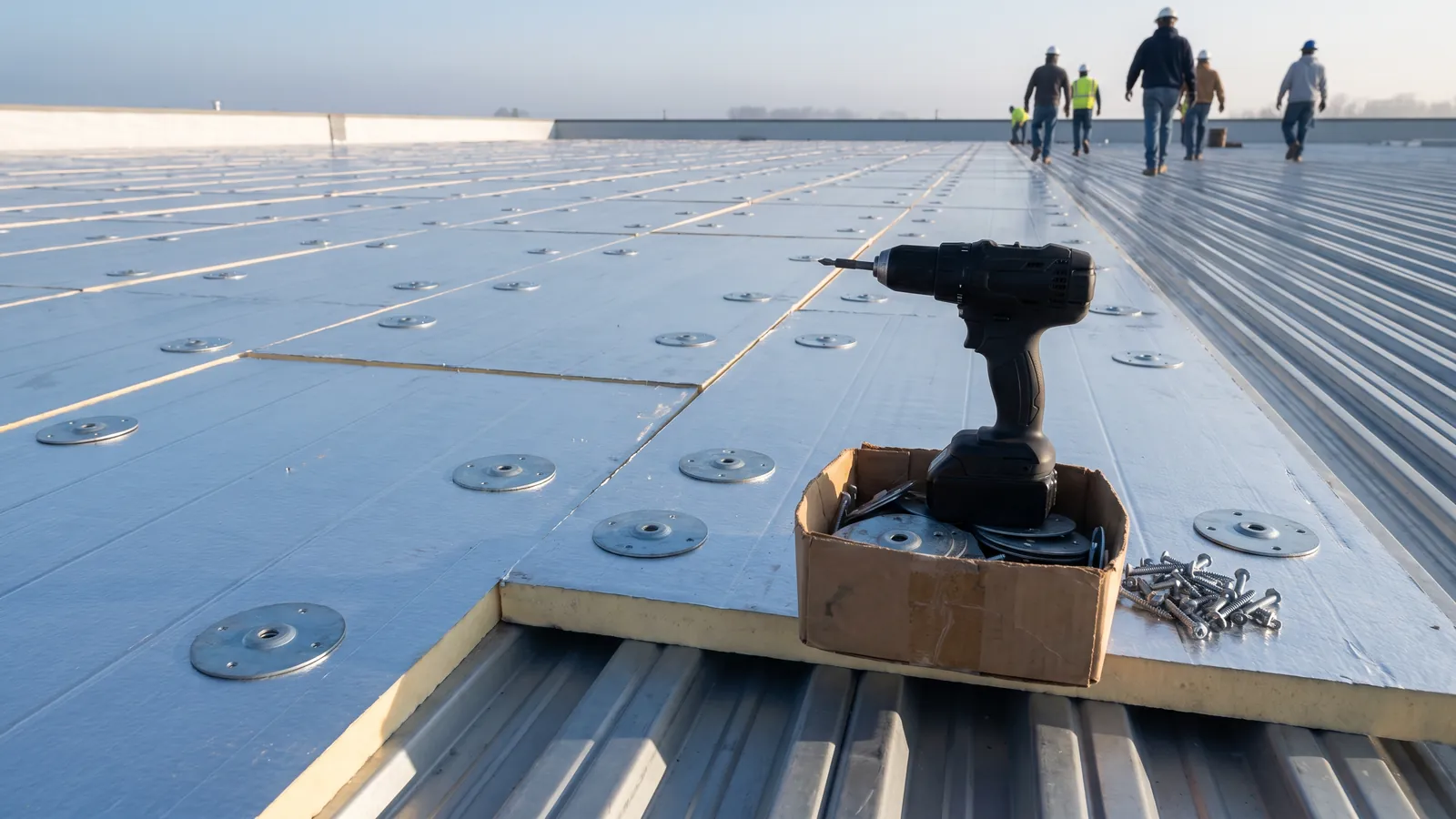
Most commercial roofs we install are TPO or EPDM over rigid insulation, fastened or adhered to the deck. The insulation is often polyiso, and where water ponds, tapered polyiso builds in the slope a flat roof needs. Rooftop equipment gets its own detail work: HVAC curbs flashed into the membrane, condensate lines routed, and walkway pads where technicians cross the roof so they don't wear holes in it.
We schedule around operating hours, keep fumes and noise away from air intakes, and stage materials so loading docks and parking stay usable. Before work starts you get a written scope, a phased schedule, and a clear list of what's included: tear-off, insulation, membrane, flashing, drains, edge metal and cleanup.
Commercial jobs that cross the state's dollar threshold must be done by a contractor licensed by the North Carolina Licensing Board for General Contractors, and the larger the project, the higher the licence tier required. We send roofers licensed at the level your project needs.
What the job includes
Membrane systems
TPO and EPDM roofs over fastened or adhered insulation.
Recover option
New membrane over a dry existing roof when code and core samples allow.
Rooftop units
HVAC curbs, vents and condensate lines detailed into the new roof.
Tapered insulation
Built-in slope to clear ponding toward drains and scuppers.
Phased scheduling
Work planned around business hours, deliveries and tenants.
Maintenance plans
Twice-yearly inspections with photo reports and small repairs.
What commercial roofing costs in Charlotte
| Work | Typical range | What changes it |
|---|---|---|
| Commercial TPO replacement | $8 – $14 per sq ft | Insulation, tear-off, edge detail |
| Roof recover over dry roof | $5 – $9 per sq ft | Core samples decide eligibility |
| EPDM replacement | $7 – $12 per sq ft | Attachment method |
| Leak repair call | $400 – $1,500 | Access, membrane type, area |
| Maintenance plan | From $0.08 per sq ft yearly | Roof size and equipment count |
| Infrared or core-sample survey | $600 – $2,500 | Roof area |
Ranges are planning numbers for the Charlotte area in 2026, not quotes. Your price comes in writing after the inspection, with materials named and the permit listed when one is required.
On the job
Commercial roofing: common questions
What's the difference between a recover and a replacement?
A recover adds a new membrane over the existing roof; a replacement tears it off to the deck. Recovers cost less but only work when the existing insulation is dry and code allows another layer.
Can you work while we're open?
Usually. We phase the work, keep access routes clear, and schedule the loudest or smelliest steps for off-hours when that matters.
Do you handle churches and HOA buildings?
Yes. Mixed pitched and flat roofs are common on churches and townhome buildings, and we coordinate with the board or facilities person on schedule and approvals.
How often should a commercial roof be inspected?
Twice a year, spring and fall, and after any major storm. Most commercial leaks start small at a seam or curb.
Are commercial roofers licensed in North Carolina?
Projects over the state threshold require a contractor licensed by the NC Licensing Board for General Contractors, with limited, intermediate and unlimited tiers by project size.
Do you provide documentation for insurers or owners?
Yes: written scope, photos before and after, and the material and installation paperwork your building records need.