Siding and trim repaired where the weather got in
Siding and roofing meet at every sidewall, dormer and chimney chase. When one fails at that line, the other usually takes the water.
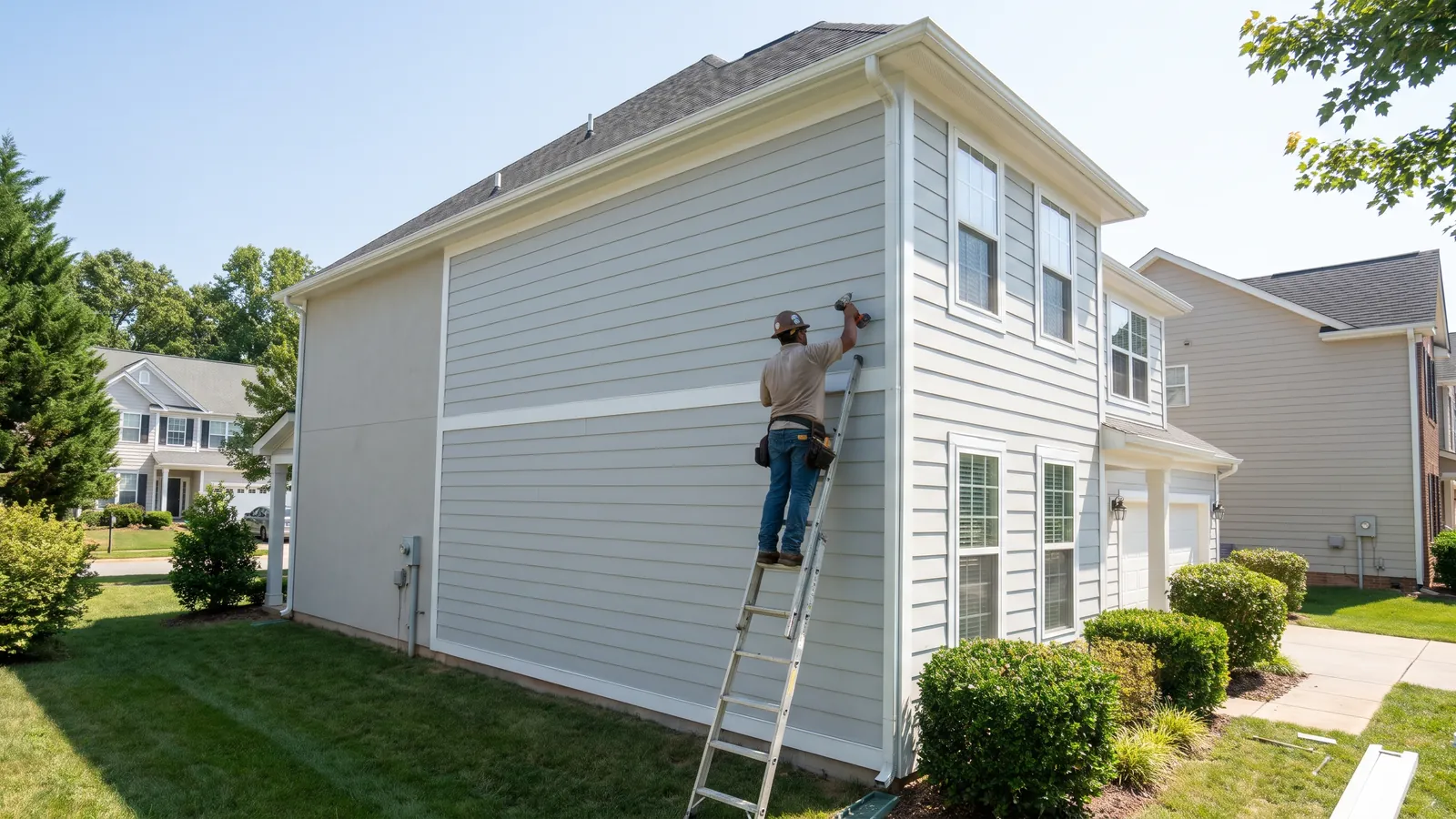
We take on siding work for the same reason we take on gutters: the roof's edges and walls are one system, and a lot of the water we chase into a house comes in where siding meets the roof. A dormer cheek with no kick-out flashing, a second-story sidewall where the step flashing was nailed through the siding, or a chimney chase with rotten trim will put water inside the wall no matter how good the shingles are.
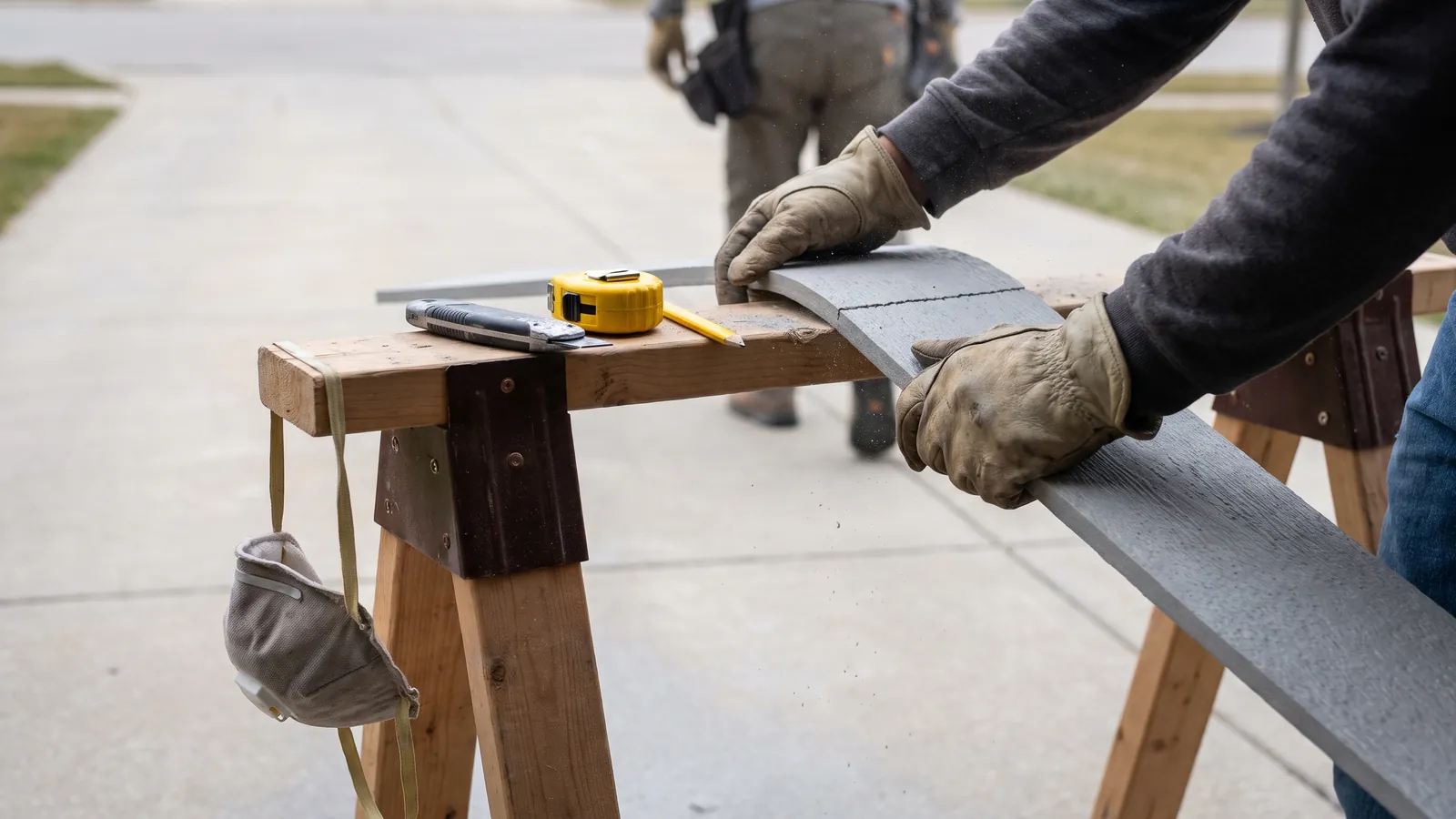
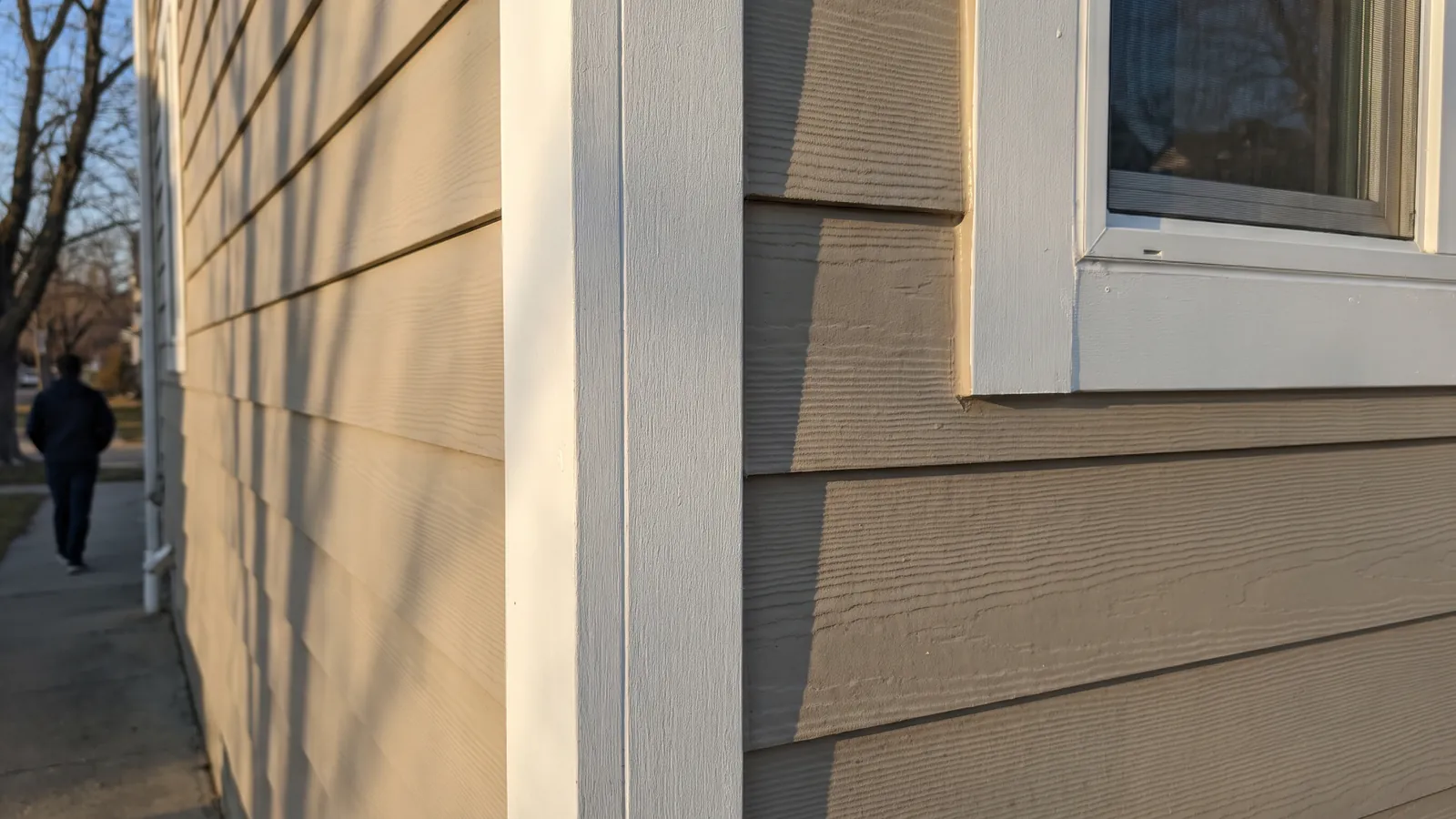
Most homes in the Charlotte suburbs are clad in fiber-cement lap siding or vinyl, often mixed with brick on the front. Repairs usually mean removing damaged boards, checking the house wrap and sheathing behind them, fixing any flashing at the roof line, and installing new boards and trim that match the profile and exposure of what's there. Fiber cement gets primed and painted to match; vinyl gets matched as closely as the current color lines allow.
When the damage is widespread, such as a whole wall of swollen, split or wind-blown siding, we'll price replacing that elevation. When we're re-roofing, we inspect every sidewall where the roof meets siding and fix the flashing there, because it's the one moment the joint is fully open.
We don't do whole-house siding conversions as a standalone trade. We do the siding work that protects a roof and a wall, and we do it properly.
What the job includes
Board replacement
Damaged lap boards removed and replaced to match the existing profile.
Wall flashing
Step and kick-out flashing fixed where roofs meet sidewalls.
Trim and corners
Rotten corner boards, window casings and fascia replaced.
Wrap and sheathing check
What's behind the siding inspected while it's open.
Paint matching
Fiber cement primed and painted to match the house.
Storm damage
Wind-blown and hail-cracked siding repaired after storms.
What siding repair costs in Charlotte
| Work | Typical range | What changes it |
|---|---|---|
| Replace a few siding boards | $350 – $900 | Material, height, paint |
| Replace one wall elevation | $3,000 – $9,000 | Size, material, trim |
| Kick-out flashing install | $250 – $550 | Siding removal and reinstall |
| Corner or casing trim | $12 – $30 per linear ft | Material and paint |
| Sheathing replacement behind siding | $80 – $150 per sheet | Only where rotten |
| Paint touch-up on new boards | $150 – $500 | Color match and area |
Ranges are planning numbers for the Charlotte area in 2026, not quotes. Your price comes in writing after the inspection, with materials named and the permit listed when one is required.
On the job
Siding repair: common questions
Can you match my existing siding?
Usually. Fiber-cement profiles are standard and paint matches well. Vinyl colors change over time, so an exact match isn't always possible on older homes.
Why is my siding rotting near the roof?
Often a missing kick-out flashing where a roof edge meets a wall, which dumps water down the siding instead of into the gutter.
Is fiber cement better than vinyl?
Fiber cement is heavier, more rigid and holds paint; vinyl costs less and never needs painting. Both work when installed with good flashing.
Do you replace siding on the whole house?
We focus on repairs and single elevations tied to roof and wall problems, not whole-house siding projects.
Does siding repair need a permit?
Small repairs usually don't. Larger projects may, depending on the town; we check.
Can you repair siding after hail?
Yes. Hail can crack vinyl and dent trim; we document it for your claim along with the roof.