Storm damage to the roof: the first hours and days
A checklist for the morning after hail, high wind or a falling limb, in the order things should happen.
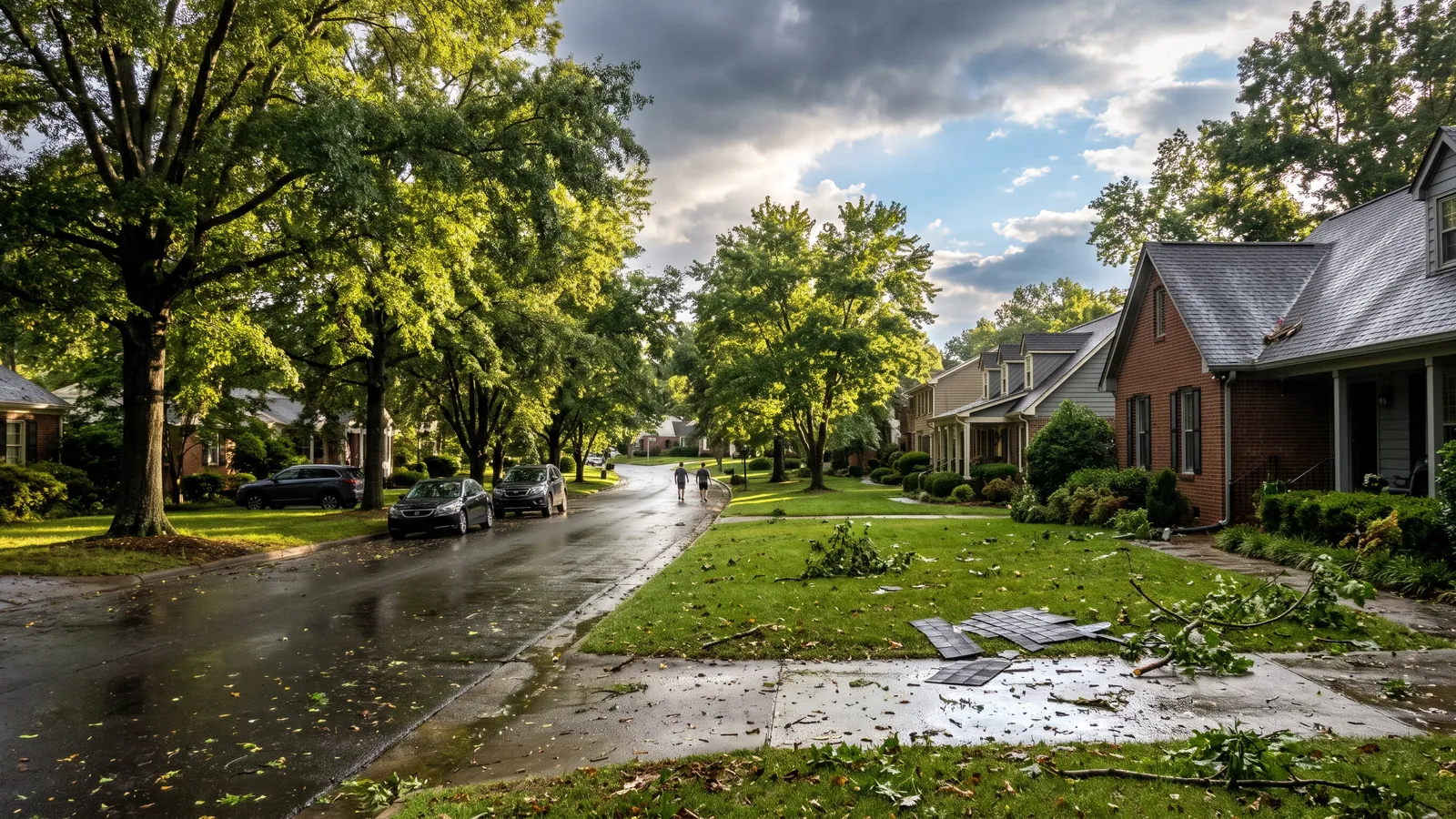
Right away
- Stay safe. Keep away from downed lines and sagging ceilings. Don't climb on a wet or damaged roof.
- Stop water inside. Move furniture and electronics, put down buckets and towels.
- Photograph damage. From the ground and inside: shingles in the yard, dents, stains, the limb on the roof.
The same day
- Get a tarp on. If the roof is open, call for an emergency tarp fastened with battens.
- Call your insurer. Get a claim number and ask about your wind and hail deductible.
- Keep receipts. For tarps, cleanup and anything you buy to protect the house.
In the next few days
- Get an inspection. A roofer documents every slope with photos.
- Meet the adjuster. Having the roofer there helps.
- Compare quotes. Check the licence, insurance and permit plan. Don't sign with the first person who knocks.
Charlotte storms in 2026
The region saw tornado and wind reports in Center City in March 2026, hail and 60 mph winds on July 10 that left about 21,000 Duke Energy customers without power, a quarter-size hail threat in Lancaster County on July 12, and more severe storms in August and September. None of that is unusual for the Piedmont, and it's why storm damage is such a common reason for roofing calls here.
Quick questions
Is it safe to stay in the house with roof damage?
Usually, if ceilings aren't sagging and there are no electrical hazards. When in doubt, get out and call for help.
How soon should I get a tarp?
As soon as safely possible. More rain means more interior damage.
Should I wait for the adjuster before repairing?
Do emergency protection right away; hold off on permanent repairs until the adjuster has seen the damage.
Can I use a roofer from out of town?
You can, but check the North Carolina licence, insurance and local permit history.